Siddhar Secrets: The Forgotten Story of Tamil Yoga
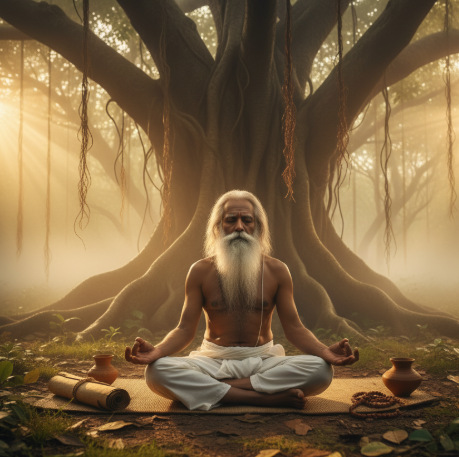
How Tamil people lost there Yogic practice books and tradition in old times ? is that only Tamil People owns the Yogic Practice?
While the precise reasons behind the disappearance of Tamil yogic traditions and their associated texts remain uncertain, multiple contributing factors are likely at play.
How Tamil Yogic Wisdom Faded Through Time
Though no single event can be identified as the cause, a range of historical and cultural factors have influenced the decline or transformation of yogic traditions and texts over time.
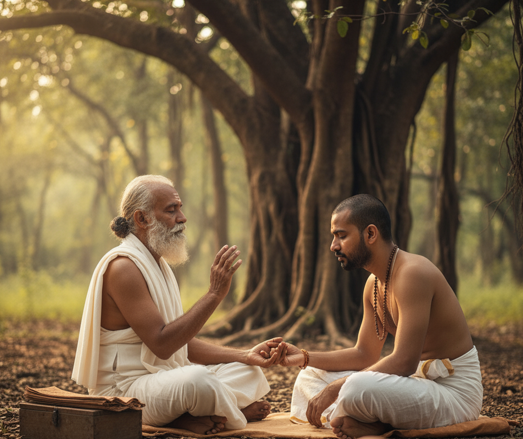
Traditionally, yogic wisdom was transmitted orally from Guru (Teacher)- to Seedar ( Student), ensuring the preservation of an unbroken lineage. However, this mode of transmission is inherently fragile once a lineage is disrupted, the knowledge risks being lost.
Over the centuries, evolving religious currents within Hinduism increasingly prioritized devotional worship and temple-based rituals. This shift may have contributed to a gradual decline in the prominence of yogic traditions.
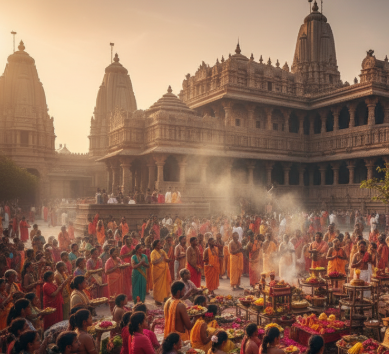
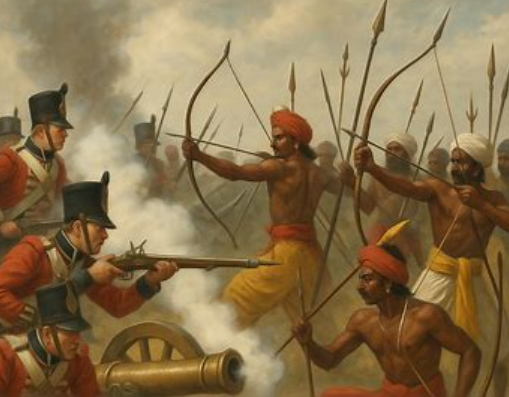
Throughout history, South India including Tamil Nadu experienced repeated invasions by external powers. In many cases, ruling empires may have actively suppressed or eradicated yogic texts and practices that were perceived as conflicting with their own religious or cultural ideologies.
In contemporary times, the globalization and commercialization of yoga have contributed to a growing detachment from its traditional foundations. The rise of modern postural yoga centered primarily on physical fitness has often overshadowed the spiritual and philosophical dimensions of the practice. This shift is viewed by some as a ‘second colonization,’ wherein the original, integrative teachings are marginalized.

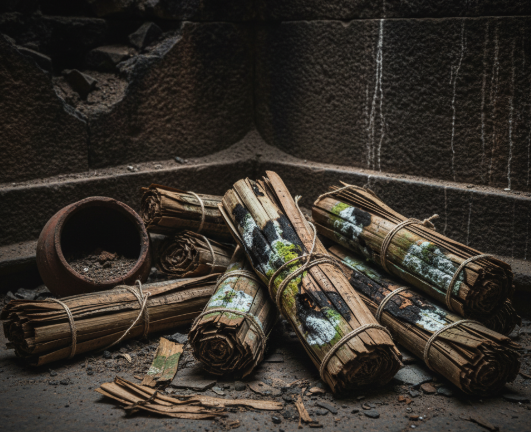
Over the centuries, palm-leaf manuscripts and other ancient records like all historical texts faced inevitable deterioration due to environmental factors, including decay, fire, and natural calamities.
Yogic practices may not have received the same cultural prominence or institutional support as other facets of Tamil heritage, resulting in limited efforts toward their preservation.
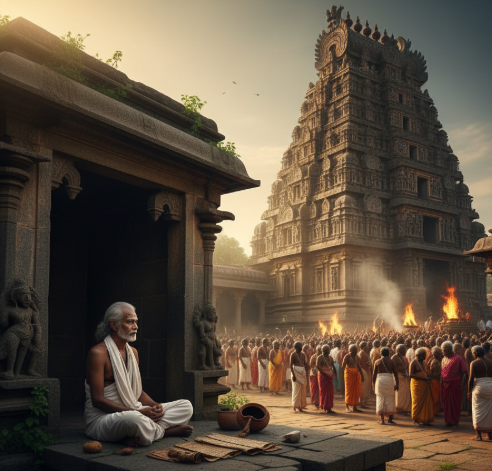
Was Yogic Practice Exclusive to Tamil People?
Within the Tamil scholarly and cultural community, there is a compelling assertion that yoga originates from ancient Tamil traditions. The Tamil Siddhar lineage featuring eminent sages such as Thirumular preserves a profound legacy of yogic and medicinal knowledge. Central to this tradition is the Thirumantiram, a seminal text offering comprehensive insights into diverse yogic practices.
Certain scholars propose a distinction between the ‘Muni tradition’ rooted in Tamil culture and the Vedic ‘Rishi tradition.’ According to this view, yoga originated within the Muni tradition and was subsequently assimilated and disseminated by the Vedic tradion.
Although not widely endorsed by contemporary scholarship, certain theories propose that yoga’s origins may extend back to the Indus Valley Civilization, citing seals that appear to depict figures in postures reminiscent of yogic practice.
In conclusion, the Tamil Siddhar tradition occupies a distinct and influential role in the historical development of yoga, particularly through its extensive literary and practical contributions. However, yoga itself is a vast and evolving system shaped over millennia by diverse traditions and regions throughout the Indian subcontinent spanning both Northern and Southern cultural landscapes.
It is essential to recognize that yogic practices have not entirely disappeared from Tamil cultural heritage. Traditions such as Siddha medicine which integrates yogic principles and martial arts like Varma Kalai continue to preserve aspects of ancient yogic wisdom.
Here are some resources for further exploration
Exploring the historical foundations of Siddha medicine may uncover significant links to ancient yogic traditions.
A study of the origins of Tamil martial arts such as Varma Kalai may reveal embedded yogic elements preserved within their techniques and philosophy.
Examine the contributions of present-day Tamil scholars who are actively investigating the historical development of yogic traditions in Tamil Nadu.
Books & Academic Works
| # | Book/Work |
|---|---|
| 1 | Ganapathy, T.N. (Editor). The Yoga of the 18 Siddhas: An Anthology. This is a key work that provides translations and scholarly analysis of the poems and philosophy of the Tamil Siddhars. It is an essential resource for anyone wanting to delve into the specifics of this tradition. |
| 2 | Govindan, Marshall. Babaji and the 18 Siddha Kriya Yoga Tradition. This book, while also a spiritual text, offers a detailed introduction to the lineage of the 18 Siddhars and their teachings, specifically linking them to the practice of Kriya Yoga. |
| 3 | Weiss, Richard. Recipes for Immortality: Healing, Religion, and Community in South India. While focusing on Siddha medicine, this book provides critical context on the Siddhar tradition and its intertwined relationship with yogic and alchemical practices. It sheds light on the holistic nature of the Siddhar system. |
| 4 | White, David Gordon. The Alchemical Body: Siddha Traditions in Medieval India. This is a highly regarded academic work that explores the historical and philosophical underpinnings of the Siddha traditions, including their relationship with Tantra and the physical body. It provides a broad-ranging scholarly perspective. |
| 5 | Singleton, Mark. Yoga Body: The Origins of Modern Posture Practice. While this book focuses on the more recent history of yoga and its physical practices, it is crucial for understanding the modern landscape of yoga and the disconnect from its ancient roots. It provides context for the “re-evaluation” of ancient traditions. |
Key Texts (Translated)
| # | Texts |
|---|---|
| 1 | Thirumular. Thirumantiram. This is the foundational text of the Tamil Siddhar tradition, believed to have been composed by the Siddhar Thirumular. Numerous translations and commentaries are available. It is the primary source for understanding Siddhar Yoga, including its focus on kayasiddhi (perfection of the body) and the unique concept of “Anbe Sivam” (“Love is God”). |
Scholarly Articles & Reputable Websites
| # | Article |
|---|---|
| 1 | “Yoga for Healthy Life: Siddhar Thirumoolar’s Concept in Siddha System of Medicine – An Overview” (Journal article from a Siddha medicine council): This type of research paper specifically connects the philosophical and yogic concepts of the Thirumantiram to the practical applications of Siddha medicine, highlighting the holistic approach of the tradition. |
| 2 | ResearchGate & JSTOR: These academic databases contain numerous articles on the history of yoga, including those that challenge the North-Indian-centric narrative and explore the contributions of Dravidian and Siddhar traditions. Searching for terms like “Tamil Siddhar Yoga,” “Thirumantiram,” and “Dravidian roots of yoga” can yield relevant scholarly papers. |
| 3 | Sahapedia, “Yoga: A Historical Overview”: This article provides a broad, well-researched overview of yoga’s history, touching on the various origins and traditions, including the role of the sramana and ascetic communities in developing yogic practices. It helps to contextualize the Tamil tradition within the broader Indian context. |
| 4 | ResearchGate papers on “The impact of British colonial rule on the Indian education system”: These papers provide detailed information on how British policies, such as the English Education Act of 1835, actively suppressed traditional knowledge systems, including Ayurveda and Siddha medicine, which were closely linked to yogic practices. This addresses the “lost tradition” aspect of the question. |
Leave a Reply
You must be logged in to post a comment.